
Best Trading Platform for Beginners (2026)
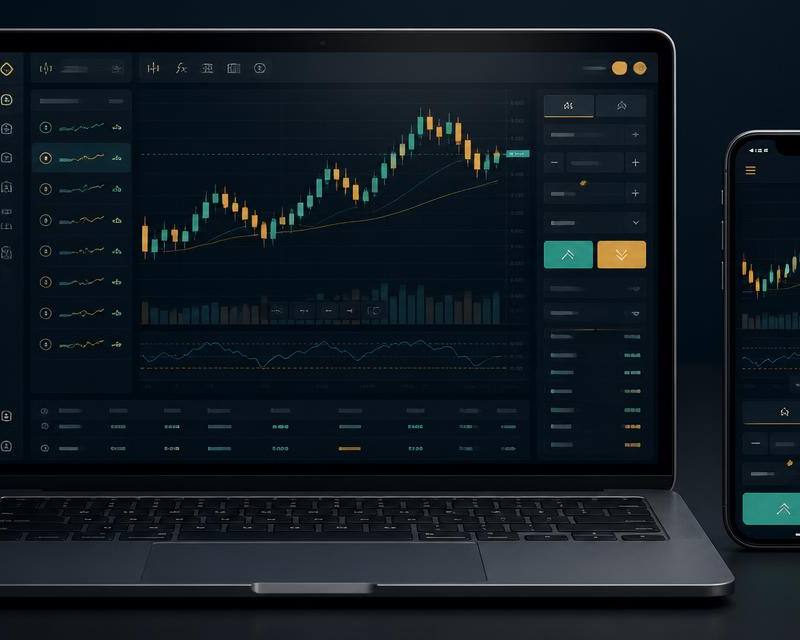
How to choose a beginner trading platform in 2026: our seven-factor scoring framework, the real cost of a spread, platform types compared, and a 30-day demo-to-live path.
Key takeaways
- The best beginner trading platform is a Tier-1 regulated broker platform offering 0.01-lot sizing, an unlimited demo and fully visible all-in costs.
- We weight regulation (25%) and cost transparency (20%) above charting and market count, because most first-year account failures come from sizing and cost, not tools.
- All-in cost on a 0.10-lot EUR/USD round trip is roughly 1.55 pips (about $1.55) once spread, commission and swap are added - around 15% of a 1% risk budget on a $1,000 account.
- Retail leverage is capped at 30:1 on major FX pairs in the EU and UK and 50:1 in the US; beginners should manually set leverage lower at account opening.
- Spend 30 days on demo with one instrument and one setup, then go live at minimum size and only scale after 100 journalled live trades.
Short answer: the best trading platform for a beginner in 2026 is the one with a Tier-1 regulated broker behind it, a 0.01-lot minimum size, a demo that never expires, and an all-in cost you can actually calculate before you click buy. Chart features and social feeds are the least important thing on the list.
"Best platform" is usually marketed as a features race. It is not. For a first-year trader the platform is a risk-control tool, and almost every account that fails does so for reasons the platform could have prevented: position sizes that were too large to survive a normal drawdown, costs that were never measured, and leverage defaults nobody changed.
How we score a beginner platform
We weight seven factors. The weights are ours and they are deliberately skewed towards survival rather than sophistication.
| Factor | Weight | What a 10/10 looks like |
|---|---|---|
| Regulation and fund safety | 25% | Named Tier-1 entity (FCA, ASIC, CySEC) on your client agreement, segregated funds, negative-balance protection |
| All-in cost transparency | 20% | Spread, commission, swap and conversion fee all visible before the order is placed |
| Minimum size and deposit | 15% | 0.01 lots, $50–$100 to open |
| Demo quality | 15% | Unlimited duration, live pricing, same order tickets as the live account |
| Order and risk tooling | 10% | Stop-loss attached at entry, position-size calculator, partial closes |
| Education inside the platform | 10% | Structured path, not a blog dump |
| Mobile parity | 5% | Same order types and stop management as desktop |
Notice what carries almost no weight: indicator count, social copy-trading feeds, and the number of tradable markets. A beginner trading two instruments well beats a beginner with 3,000 markets and no process.
Which type of platform should a beginner use?
| Platform type | Best for | Trade-off |
|---|---|---|
| Broker’s own web/app platform | Absolute beginners | Simplest order flow; fewer advanced tools |
| MetaTrader 4 / MetaTrader 5 | FX and metals, automation later | Dated interface, steeper first week |
| TradingView connected to a broker | Chart-led traders | Best charting; execution still depends on the broker behind it |
| Stock/ETF investing apps | Long-term investing, not trading | No leverage, limited order types, slower execution |
Most new traders are better served starting on the broker’s own platform for the first month, then adding MT5 or TradingView once order mechanics are automatic. If you are specifically comparing brokers rather than platforms, our beginner forex broker guide covers account terms in more depth, and the wider best forex broker 2026 comparison covers scalping and Islamic accounts.
What a platform actually costs you
The advertised spread is not the cost. The cost is spread plus commission plus overnight swap plus any currency-conversion fee, measured against your position size.
Worked example. You trade 0.10 lots of EUR/USD (10,000 units), so one pip is roughly $1.00. A 0.9-pip spread costs $0.90 on entry. A $3.50-per-lot round-turn commission costs $0.35. Hold the position overnight and a typical swap charge might be another $0.30. Total: about $1.55 per round trip, or 1.55 pips. On a $1,000 account risking 1% ($10) per trade, that is roughly 15% of your risk budget consumed by costs before the market has moved. Take five such trades a week and costs alone are about 3% of the account per month.
This is why cost transparency outranks charting in our weighting. A platform that hides the swap column until after the position is open is not a beginner platform.
Leverage defaults: the number that decides your first year
Retail leverage is capped at 30:1 on major currency pairs in the EU and UK under the ESMA and FCA product-intervention rules, and at 50:1 on majors in the US under NFA rules. Offshore entities advertising 500:1 are not offering you a better platform; they are offering you a faster route to a margin call. ESMA’s own intervention analysis found the large majority of retail CFD accounts lose money, which is the base rate you are trading against.
Set your own leverage down at account opening. It is a one-click setting on most platforms and it is the single highest-value thing a beginner does on day one.
A 30-day path from demo to live
- Days 1–7: Demo only, mechanics only. Place, modify and close orders. Attach a stop at entry every single time. No strategy.
- Days 8–21: One instrument, one setup, one session. Journal every trade with a screenshot and the reason for entry. Record the all-in cost of each trade.
- Days 22–30: Review. If your expectancy is negative, stay on demo. If positive across at least 30 trades, go live at the smallest size the platform allows.
- After 100 live trades: Scale size only on the full sample, never on the last ten.
While you are practising, our free trading tools — the economic calendar and technical-analysis screens — give you the same context that professional desks work from, and the free forex signals hub shows how a structured entry, stop and target is written down before the trade.
Red flags that disqualify a platform
- No named regulator and register number on the client agreement.
- Deposit bonuses with volume conditions attached to withdrawals.
- Demo pricing that visibly differs from live pricing.
- No way to attach a stop-loss at the moment of entry.
- Guaranteed-return or "risk-free" language anywhere in the marketing.
Any one of these is enough to walk away, regardless of how good the charts look.
Our verdict for 2026
Pick a Tier-1 regulated broker platform with 0.01-lot sizing, an unlimited demo, visible all-in costs and leverage you set yourself. Add MT5 or TradingView in month two if you need them. If you want to start on a regulated account that meets the criteria above, you can open a trading account here.
Risk warning: trading leveraged products carries a high risk of losing money rapidly. This article is educational and is not investment advice. Past performance does not indicate future results.
Sources & methodology
Primary sources and datasets referenced in this article. How we source, verify and date our reporting is set out in our editorial policy & methodology.
- ESMA agrees to prohibit binary options and restrict CFDs to protect retail investors— European Securities and Markets Authority · published 27 Mar 2018
- PS19/18: Restricting contract for difference products sold to retail clients— Financial Conduct Authority · published 1 Jul 2019
- NFA Financial Requirements: forex security deposit rules— National Futures Association · published 18 Oct 2010
- Report on Retail OTC Leveraged Products— IOSCO · published 1 Sept 2018
- Triennial Central Bank Survey of foreign exchange and OTC derivatives markets— Bank for International Settlements · published 27 Oct 2022